I left around 8am this morning from Carbondale to take a little ride along the Ohio River and valley areas. Lots of historical places along my path. When I took off, temps were in the mid 20's, had to clean some frost off the Valk as I forgot to cover it last night.

I traveled east and went through the small town of Equality IL. I was shocked to see that the town still had one of these. I guess with Metropolis IL not being to far away, Superman may need these stationed around the area for changing rooms


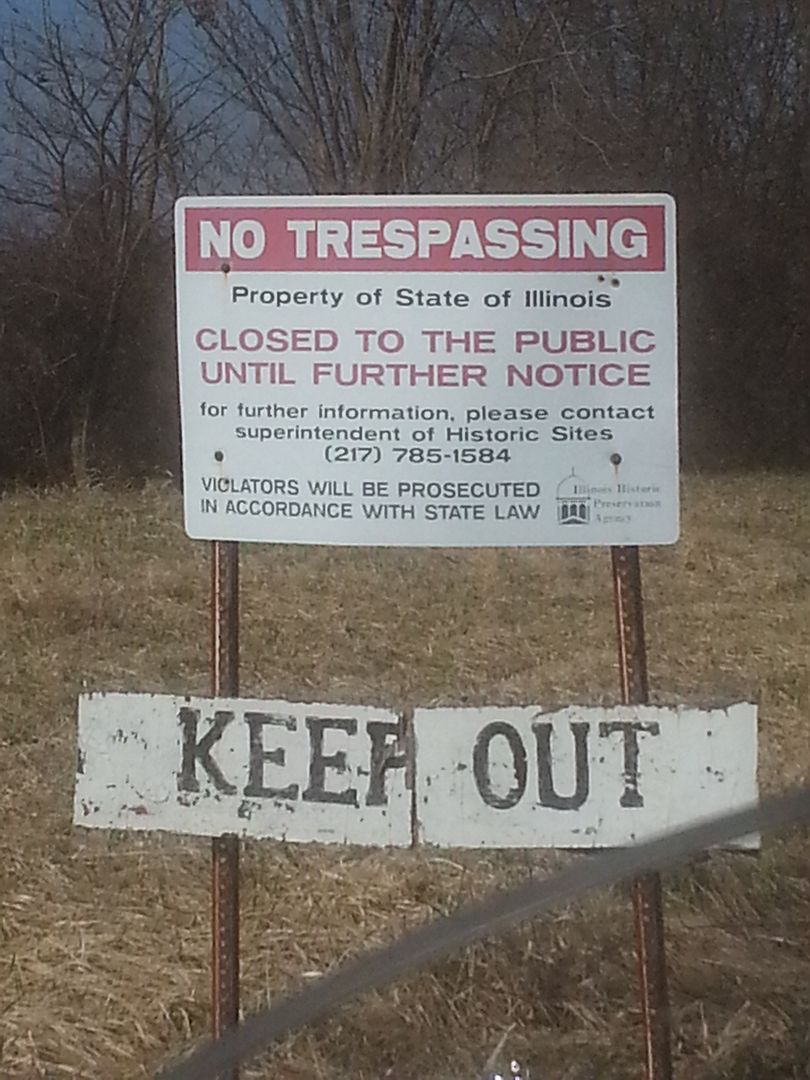
My first historical stop is probably the worst and most brutal story of Illinois History. The Crenshaw House/Mansion, AKA Old Illinois Slave House or Hickory Hill is one of the top haunted places in Illinois and some say the nation. The State of Illinois now owns the property and has shut it down to tourist, this is the closest I could get to it to take a photo. History of the home is explained below.

In the 1800’s it was formally called Hickory Hill. It’s now known as the old Crenshaw Place, or the Old Slave House. And it’s claimed to be one of the most haunted places in the southern part of Illinois.
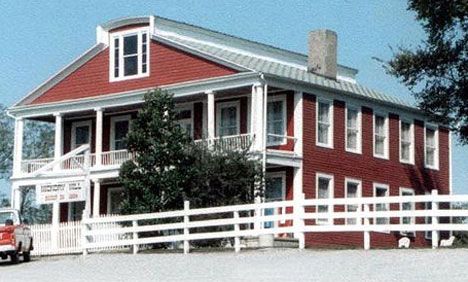
Located near Equality, Illinois, in Gallatin County, the large, two-story pseudo Greek Revival style house is situated on top of a windswept hill, overlooking the Saline River. John Hart Crenshaw had the house supposedly built for his wife, Sinia Taylor Crenshaw and their five children. But research has revealed the most important function of the house was to aid as a place to stash kidnapped free blacks before sending them into slavery, a reverse Underground Railroad.
John Crenshaw became deeply involved in the slave trade during the 1820’s. He was charged several times with kidnapping, and became a slave trader in 1827. The first documented case against his involved a black indentured servant named Frank Granger that Crenshaw kidnapped and took to Kentucky in 1828. The second kidnapping case followed right on the heels of the first and involved a free black woman named Lucinda and her two children. Crenshaw kidnapped the three and took them to Barren County Kentucky in 1828 to be sold into slavery. Crenshaw was also known as John Granger, (pronounced more like Cringer) due to regional dialects and accent.
n 1829, Crenshaw and his brother, Abraham, bought the land where Hickory Hill would be built. It would be almost five years, in 1834, before ground was broken for the house, and another four before it was completed in 1838. The lavish house was furnished with European artwork and furnishings located on the first and second floors, where the family lived. The third floor was constructed of thicker walls with over a dozen cells, about the size of horse stalls, all equipped with heavy metal rings and chains. A whipping post was located at either end of the hallway. Windows at each end of the hall provided the only light and air to the attic. It would only be after Crenshaw’s and his wife’s deaths, when new owners took over that the true secrets of the attic would come to light.
Meanwhile, Crenshaw bought his first salt works in Gallatin County. Few men were interested in the harsh work and brutal conditions required to mine salt, so Crenshaw used slave laborers and indentured servants. Although Illinois was a ‘free state’ where slavery was not allowed, an exception had been granted to Crenshaw for slaves to be leased for one-year terms for use in the salt mines in Gallatin, Saline and Hardin Counties. Illinois also allowed indentured servitude; the contracting of work for a specific period of time in exchange for food, shelter, and sometimes passage. Crenshaw owned over 30,000 acres of land and leased numerous salt mines from the government. He had over 700 slaves working for him in 1830. At one time it was said that Crenshaw had made so much money he paid 1/7 of all taxes collected in Illinois. It is from his illegal trafficking of humans into slavery that much of his vast fortune was made. When the house at Hickory Hill was built, a secret wagon entrance was constructed in the back of the house. Covered wagons carrying kidnapped blacks and indentured whites would go directly into this entry. Then the kidnapped would be taken up the back stairs to the third floor attic of his home. There they were imprisoned in cells, tortured, raped, whipped, and sometimes murdered. According to local legend, there was also a secret tunnel from the basement to the Saline River so that the kidnapped could be put on boats quickly and inconspicuously.
Crenshaw then devised a plan to begin a slave-breeding program in the attic. A slave named Uncle Bob was used as the stud breeder to provide Crenshaw with cargo to sell off to the south. A pregnant black woman would bring more money at auction in a slave state. An adult able-bodied slave could bring $400 or more. A child could be sold for around $200. It was said that Uncle Bob sired more than 300 children in that upstairs attic.
Crenshaw was finally indicted in 1842 for the kidnapping of Maria, his cook, and her seven children. Because of his clout and financial standing in the community, he was found not guilty. (If he had been found guilt, no jail time would have been served; the only penalty was a fine of $1,000 allowed by the Black Code of 1819.) But people in the area talked and suddenly Crenshaw’s methods were being questioned. His mill was burned and his standing as an upright and moral man in the community was waning. Business in the salt works began to decline as more profitable salt was discovered in Ohio and Virginia. Crenshaw was now watching his empire dissolve.
Rumor has it that it was during this period of time that Crenshaw brutally beat several female slaves. In retaliation, a group of male slaves attacked Crenshaw and during the assault Crenshaw’s leg was severed with an axe. Following this attack, most of the slaves were sold off.
In 1906, the Crenshaw House was purchased by the Sisk family. The true horrors of what had occurred on the third floor were then unmasked. The slave quarters were dismantled soon after but talk spread and by the 1920’s tourists from around the country were arriving to see the attic and hear the stories of the Old Slave House. George Sisk decided to capitalize on the history and by the 1930’s, was advertising that you could tour the house where “Slavery existed in Illinois,” for only 10 cents for adults and a nickel for children.
It was during these tours that people began to report odd occurrences on the third floor; unseen fingers touching passersby, strange noises, rattling chains, whispering voices, hushed sobbing, and the feeling of being watched. Legend has it that the Crenshaw House is haunted by those who were held captive there.
From the thirties to the mid-90’s, the Old Slave House was visited by many ghost hunting groups, psychics, and paranormal investigators. Many reported feelings of unrest and agony trapped up there. It was on October 31, 1996 when the Sisk’s closed the house due to their age and declining health.
In December 2000, the State of Illinois acquired the house and two acres of land from George Sisk, Jr. And in 2004 the National Park Service declared the Crenshaw house, aka the Old Slave House, as a station in the ‘Reverse Underground Railroad Network to Freedom’ program, thus acknowledging the sadistic part that John Crenshaw played in condemning free blacks and indentured servants to lives of slavery. But no plans were made to reopen the house.

Only website I found with actual photos from inside the mansion
http://ghostsofoldshawneetownillinois.webs.com/old-slave-houseI traveled down Illinois route 1 and stopped at Pounds Hollow of Shawnee National Forest.


This old general store located near Bay City Illinois was used in the filming of the movie "U.S. Marshalls" starring Tommy Lee Jones, Wesley Snipes, and Robert Downy Jr. It was a sequel to the already popular film "The Fugitive" starring Harrison Ford and Tommy Lee Jones.


General Store can be seen in the background of this short clip from the movie
My next stop was in Fort Massac State Park in Metropolis Illinois


View of the I-24 bridge crossing the Ohio River connecting Illinois and Kentucky from Fort Massac State Park

I ran across this historical marker near Anna Illinois.

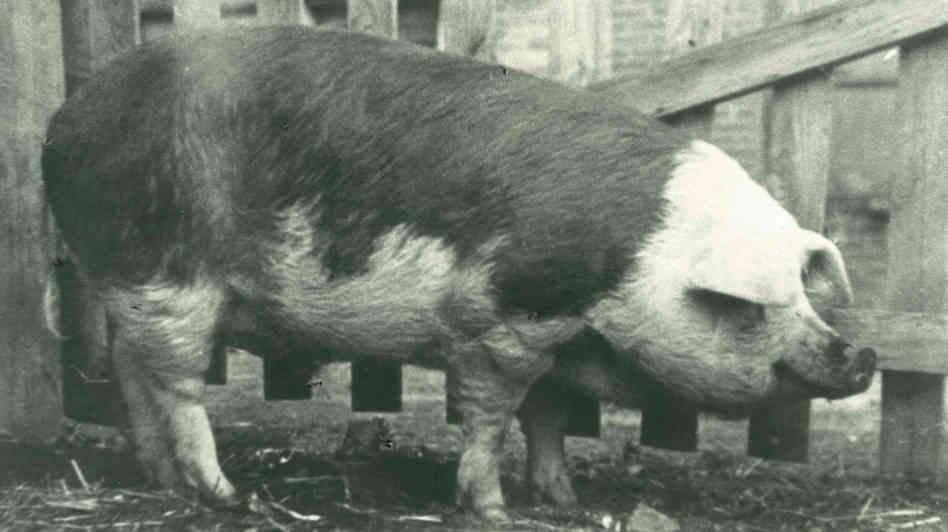
King Neptune (May 16, 1942 – May 14, 1950) was a pig used by a United States Navy recruiter to raise $19 million in war bonds (over $250 million in 2012 adjusted for inflation for the construction of the Iowa-class battleship Illinois between 1942 and 1946.
Navy recruiter Don C. Lingle, originally of Anna, Illinois working at the Marion, Illinois office, decided to auction the pig to raise war bonds. Lingle and auctioneer L. Oard Sitter traveled throughout southern Illinois auctioning Neptune for bonds for the battleship Illinois which was under construction. Eventually, the individual parts of the pig were auctioned; his squeal was auctioned for $25 on at least one occasion. After each auction, King Neptune was returned to be auctioned again later. High demand for appearances by Neptune led them to travel the rest of Illinois raising funds. The mostly red, with white features, Hereford was often displayed covered with a blue Navy blanket and wearing a crown and silver earrings.
On March 6, 1943, Illinois Governor Dwight H. Green purchased King Neptune for $1 million on behalf of the state of Illinois. At the same auction, one of Neptune's bristles was sold for $500.
On one occasion in early 1945, a check was written to King Neptune for his upkeep. The bank asked Lingle to obtain the pig's endorsement to cash the checks. Lingle was promoted to Chief Petty Officer as a result of his fund raising efforts with Neptune.
Photo of King Neptune
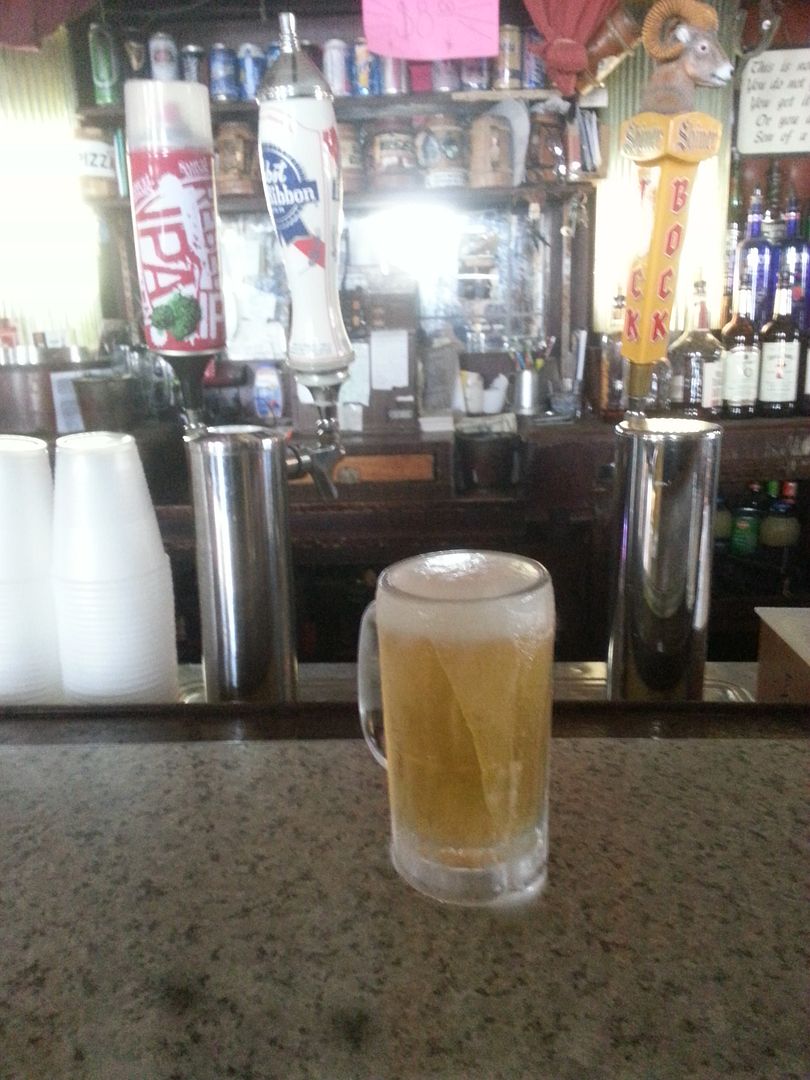
After riding all day I decided to stop at my favorite pub in Carbondale, PK's AKA Pizza Kings. It was a hot spot when Paul (fon1961) attended Southern Illinois University. It is ranked #16 in the nation for PBR sales!
The money shot "a smokinjoe trademark" taken at Pounds Hallow Lake, Shawnee National Forest.