Valkyrie Riders Cruiser Club
March 29, 2026, 09:41:08 PM *
Welcome, Guest. Please login or register.

Login with username, password and session length
Ultimate Seats Link VRCC Store
Homepage : Photostash : JustPics : Shoptalk : Old Tech Archive : Classifieds : Contact Staff
News: If you're new to this message board, read THIS!
 
MarkT Exhaust
Pages: [1]   Go Down
Print
Author Topic: Input from those in the trades - liquid floor sealer vs. rubber liner for shower  (Read 823 times)
Nico
Member
*****
Posts: 152


El Diablo !!!

Chi-town Burbs


« on: March 06, 2012, 09:38:03 AM »

I am rehabbing a condo my wife and I have purchased and I am finally done with the demolition and up to the building/remodeling part.  cooldude

So, after having removed the tub and taking the walls down to the base hollow brick substrate (see photos)
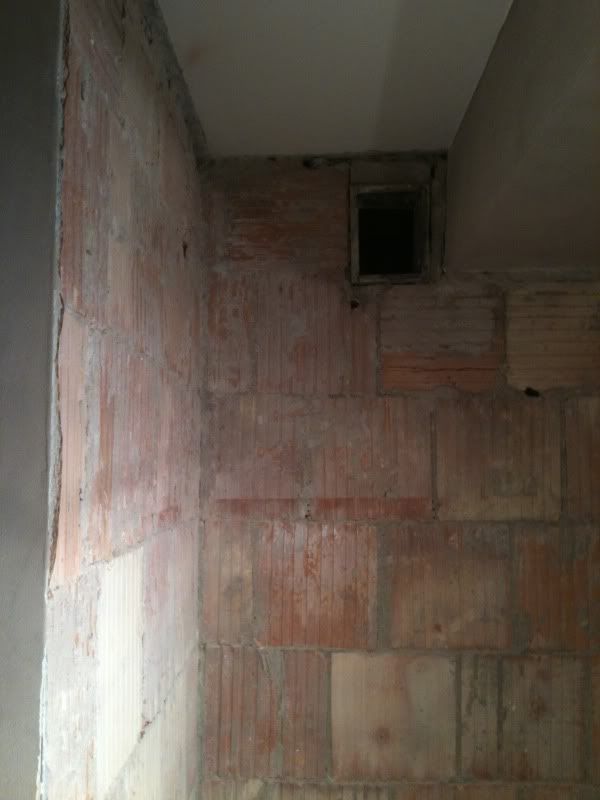
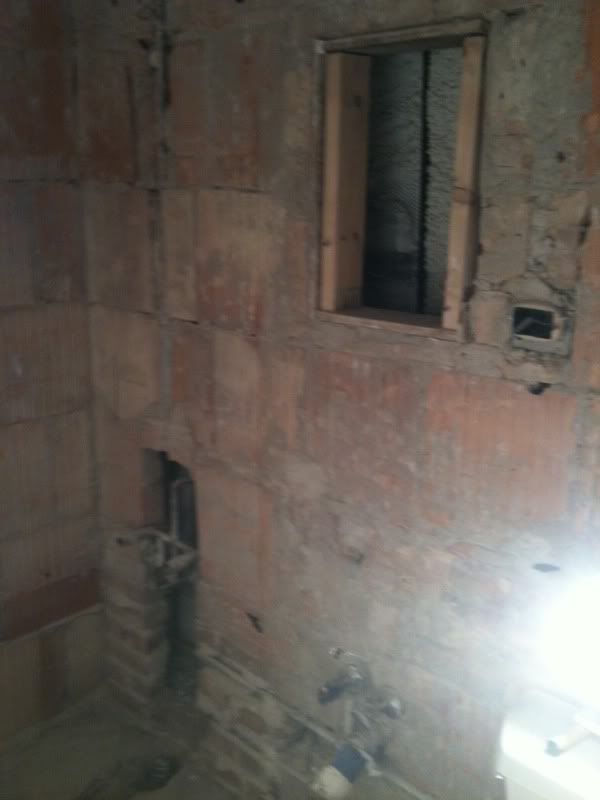


I am trying to decide on the best course of action for covering the walls and creating the floor. Here are the options I am considering:

1. Attaching 2"x2"s to the floor and ceiling (with Tapcon screws as both are concrete) and attaching 2"x3" studs (turned so the depth is 2") to minimize the size loss and to square the room (walls are WAY out of square). Floor would be a mortar bed pre-slope, rubber liner and then slope bed. Walls covered in cement board (with plastic vapor barrier) and the whole room tiled.

2. Attaching 2"x2"s to the floor and ceiling (with Tapcon screws as both are concrete) and attaching 2"x3" studs (turned so the depth is 2"). Mortar bed to the drain, cover the walls in cement board (no barrier), then seal the whole area with a liquid rubber material (leaning toward Laticrete as it has the corner membrane material) and finish with the tile.

3. Attaching 2"x2"s to the floor and ceiling (with Tapcon screws as both are concrete) and attaching 2"x3" studs (turned so the depth is 2"). Floor covered with custom made floor pan, walls covered with cement board (vapor barrier) and the space tiled.

I have done a small tile floor and a tile back splash before, so I am not completely green with that part, but have no experience with creating the floor for proper drainage and waterproofing (as this is a condo, I am very concerned with water leakage and other tenants).

Would one of these three choices be better suited for a first timer? I know the custom pan will be over $1000 (unless I can find another manufacturer who can do it cheaper). I am leaning toward the one layer slope floor and the liquid membrane. Any input (pro and con) for each of the options is greatly appreciated.

Thanks,

Nick
Logged
R J
Member
*****
Posts: 13380


DS-0009 ...... # 173

Des Moines, IA


« Reply #1 on: March 06, 2012, 10:34:41 AM »

I've watched Holmes for Homes, out of Canada quite a bit.

He always has his guy lay down a rubber membrane on the floor extending up the walls about 6".   Then he uses a cement drywall with a water barrier between the wall and the drywall.    This water barrier over laps over the floor by about 4 to 6".

If you can catch one of his shows, you will understand more of what I'm trying to say.   He is on every week, it is Sunday night.
Logged

44 Harley ServiCar


Daniel Meyer
Member
*****
Posts: 5493


Author. Adventurer. Electrician.

The State of confusion.


WWW
« Reply #2 on: March 06, 2012, 11:02:20 AM »

Check out the kerdi system...

http://www.johnbridge.com/articles/showers/kerdi-showers/

-dm
Logged

CUAgain,
Daniel Meyer
laserpat
Member
*****
Posts: 1043


Let the wind carry your troubles away!

Cedar Park, Texas


« Reply #3 on: March 06, 2012, 07:40:59 PM »

We use fiberglass pans for longetivity, rubber pans will leak sooner or later. I have used the kerdi system in my personal house with sucess. for squaring the walls, any solid attachment will work. We use hardi or durarock with redguard for an extra drainage plane. The kerdi system is a membrane applied with thinset. If you have any lumps under the kerdi the tile wont lay flat. good luck
Logged
Pages: [1]   Go Up
Print
Jump to: